 By cozylivingde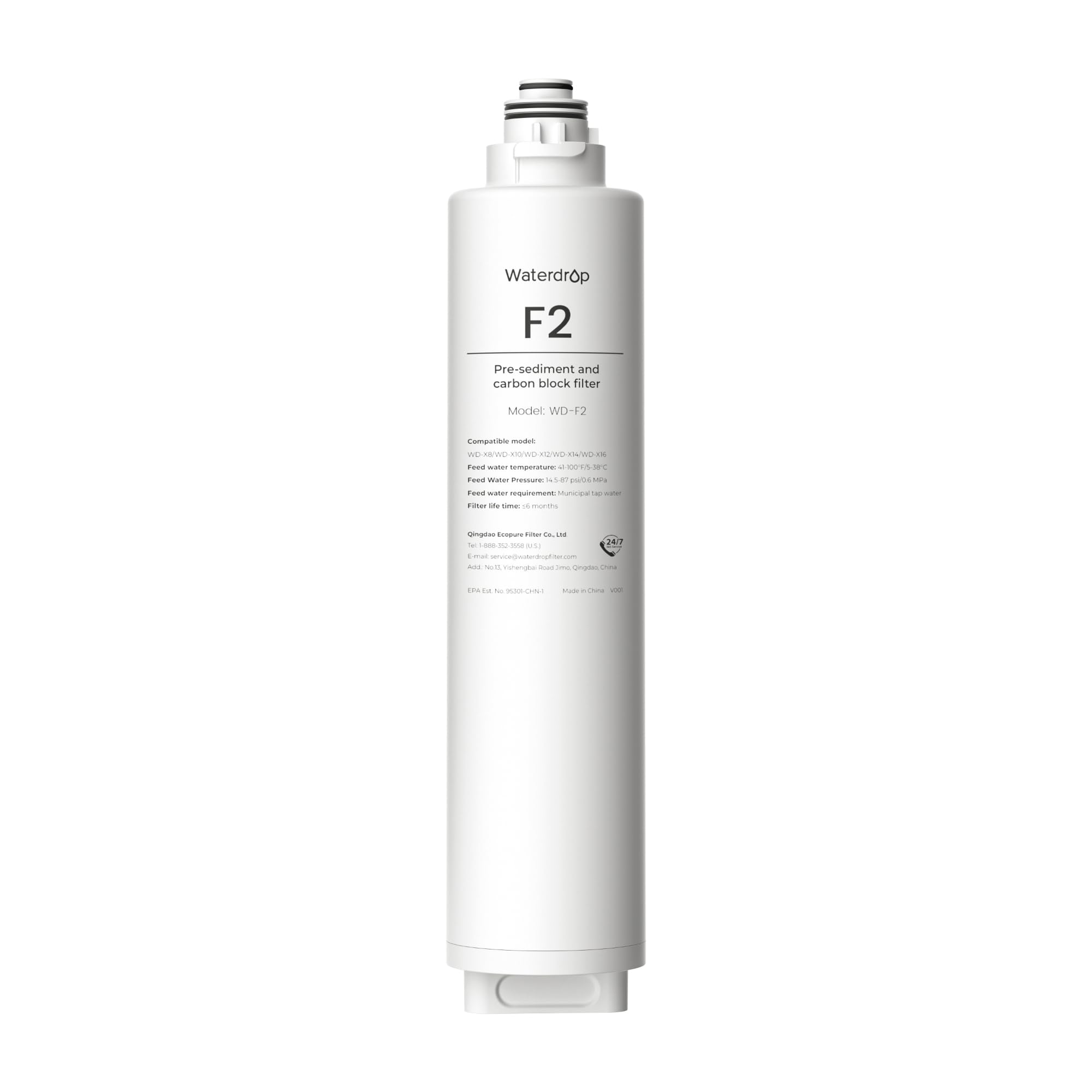
The Waterdrop F2 replacement filter is designed for the company’s X8, X12, and X16 undersink reverse osmosis systems. It’s a component you’ll need every six months or so, depending on your water usage and quality. For anyone already invested in one of these RO systems, the F2 is essentially a consumable that keeps the unit running as intended. But if you’re comparing it to generic alternatives or wondering about its fit for your specific setup, there are a few things worth noting.
In real-world use, the F2 filter handles the final polishing stage of filtration. After the RO membrane has done the heavy lifting of removing dissolved solids, this carbon block filter aims to catch any remaining tastes, odors, or trace contaminants. It’s not the primary filtration stage, but it does affect the overall water quality. Users typically notice a difference in taste and clarity when the filter is fresh versus when it’s nearing the end of its lifespan. The manufacturer recommends replacing it every six months, but that timeline can vary. If you have higher-than-average water usage or your source water is particularly hard or sediment-heavy, you might find the filter clogging or losing effectiveness earlier. Conversely, in households with low water consumption, it could last a bit longer—though sticking to the recommended schedule is generally safer for consistent performance.
Key features include a quick-twist design that simplifies installation. You don’t need tools or a service call; the filter screws into the system’s manifold by hand. This is a practical improvement over older systems that required wrenches and careful alignment. The build quality feels adequate, with a plastic housing that’s sturdy enough for typical use. However, it’s worth noting that this filter is not compatible with the X8PRO or X12PRO models. If you have one of those newer systems, you’ll need the corresponding F2PRO filter, which has a different connector and flow rate. This can be a point of confusion for buyers who assume all X-series filters are interchangeable, so double-checking your model number is essential before purchasing.
One limitation is the cost. The F2 is a proprietary filter, meaning you can’t just swap in a generic carbon block from another brand. Over time, the recurring expense adds up, especially if you’re replacing it every six months. Some users have explored third-party alternatives, but compatibility and performance can be hit-or-miss. If you’re price-sensitive, a standard under-sink system with universal 10-inch filters might be more economical in the long run. Those systems often have a wider range of affordable replacement options, though they lack the compact, tool-free design of the Waterdrop models.
Compared to a traditional three-stage under-sink filter (sediment, carbon block, and sometimes a post-carbon), the Waterdrop F2 serves a similar role but within a more integrated system. The difference is that with a modular setup, you can replace individual stages independently, whereas the F2 is a single component that combines several functions. This simplicity is convenient but reduces flexibility.
Who is this filter for? It’s best suited for current owners of the Waterdrop X8, X12, or X16 RO systems who want a straightforward, OEM-recommended replacement. If you value ease of installation and want to maintain warranty compliance, the F2 is a safe choice. It’s also good for people who don’t want to research compatibility with aftermarket parts. On the other hand, it’s not ideal for those on a tight budget, because the proprietary design locks you into a specific price point. It’s also not suitable for owners of the X8PRO or X12PRO models, and it’s overkill if you’re just looking for a basic carbon filter for a non-RO system.
In summary, the Waterdrop F2 does what it’s supposed to do—provide a reliable, easy-to-install replacement for a specific set of RO systems. It’s not groundbreaking, and it’s not cheap, but it’s a competent component that keeps your water tasting fresh. Just make sure your model is compatible, and keep realistic expectations about lifespan and cost.